
Multi-Engine Rating
A multi-engine rating adds twin-engine privileges to your pilot certificate. Whether you’re building toward the airlines or want access to faster, longer-range aircraft, this is the rating that gets you there.
What is a Multi-Engine Rating
A multi-engine rating is an add-on class rating, not a separate certificate. It is an endorsement added to your existing Private or Commercial Pilot License that qualifies you to act as pilot in command of aircraft with more than one engine.
Multi-engine training is fundamentally different from single-engine flying. The course centers on asymmetric thrust, the force created when one engine is producing power and the other is not. Learning to identify a failed engine, verify it, and take immediate corrective action is the core of this training and demands a level of precision and speed that single-engine flying does not.
For many students, this is also their first exposure to a complex aircraft. Twin-engine trainers typically feature retractable landing gear, constant-speed propellers, and more advanced fuel and electrical systems. Managing these systems under normal operations and during simulated emergencies builds the cockpit management skills that carry forward into every stage of a professional pilot career.
Course Details at a Glance
- Ground School
Instructor led ground training covering multi-engine aerodynamics, systems, and emergency procedures
- Online Study
Computer based training completed before on-site training begins
- Dual Flight Time
15 hours of flight training with a certified flight instructor in a twin-engine aircraft
- No Written Test
The FAA does not require a separate knowledge test for the multi-engine add-on. Evaluation is through an oral exam and practical checkride
Course Investment
Contact our admissions team for a personalized quote based on your experience level and goals.
Multi-Engine Add-On Rating
Pricing is based on individual needs and the aircraft used for training. Our admissions team will work with you to determine the right plan for your experience level.
15 Hrs
Minimum Dual Flight Time
Part 61
FAA Certification Standard
Call us for a quote 407-888-9011
15 hours is the minimum. Actual flight hours will vary based on individual needs and FAA certification standards. Pre and post briefing costs are not included.
Prerequisites
Pilot Certificate
Must hold an FAA Private Pilot License or Commercial Pilot License for airplane single engine land.
FAA Medical
Must hold or obtain a current and valid FAA medical certificate before solo flight.
English Proficiency
Must be able to read, speak, write, and understand English per FAA requirements.
IFR Rating Recommended
While not required, an instrument rating is strongly recommended before multi-engine training.
What You Will Learn
- Multi-engine aerodynamics and the effects of asymmetric thrust
- Vmc (minimum controllable airspeed) and Vmc demonstrations
- Engine failure identification, verification, and feathering procedures
- Single-engine flight including climbs, descents, and maneuvering
- Single-engine approaches, go-arounds, and landings
- Multi-engine systems management (fuel, electrical, hydraulic, propeller)
- Normal and crosswind multi-engine takeoffs and landings
- Engine-out emergency procedures across all phases of flight
- Performance planning including single-engine service ceiling and climb rates
- Weight and balance considerations specific to twin-engine aircraft
Frequently Asked Questions
What aircraft will I train in?
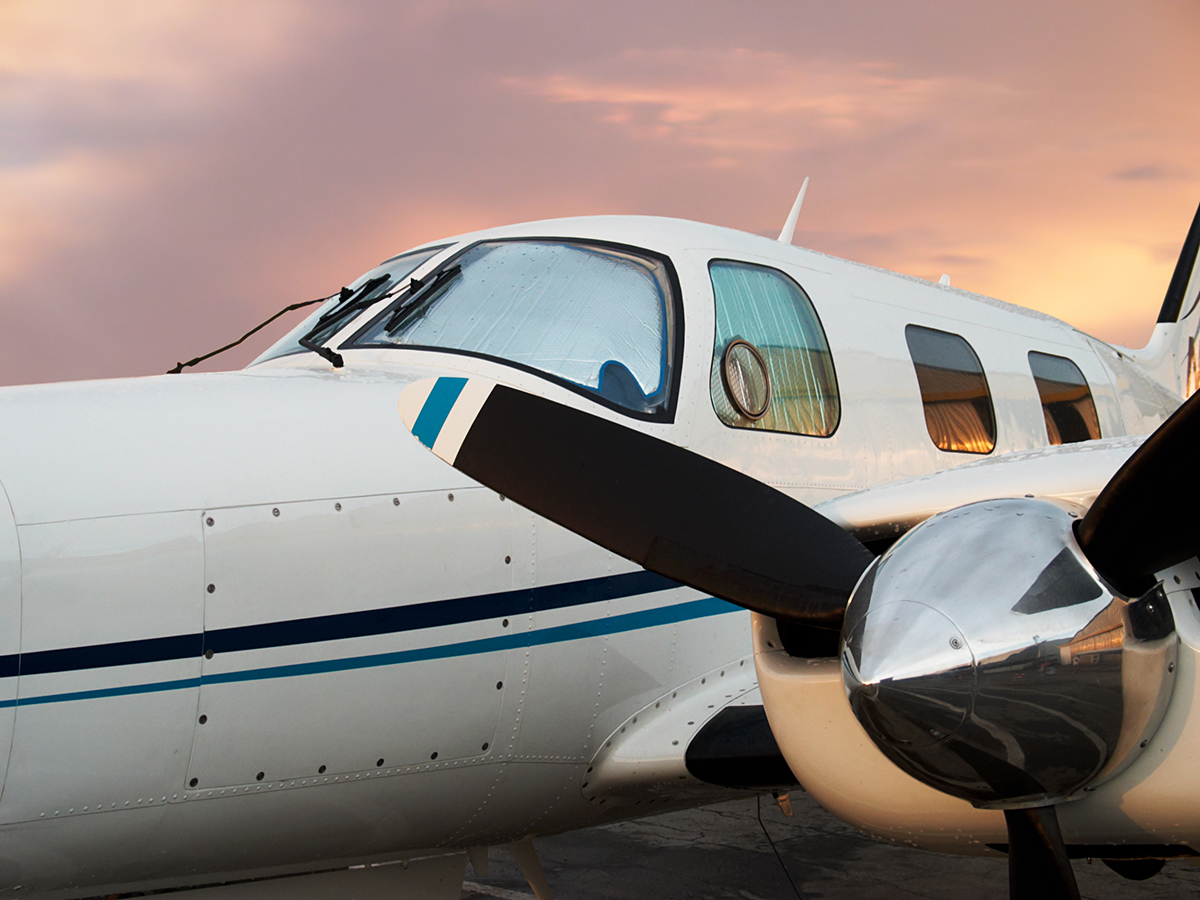
Contact our admissions team for details on the twin-engine aircraft used in AeroStar’s multi-engine program. The aircraft is equipped for all required maneuvers including engine-out procedures, feathering, and single-engine operations.
How long does the multi-engine rating take?
Most students complete the multi-engine add-on in one to two weeks with consistent full-time training. The course requires a minimum of 15 hours of dual flight instruction plus ground school. Your actual timeline depends on how quickly you demonstrate proficiency in engine-out procedures and multi-engine operations.
What is Vmc?
Vmc stands for Minimum Controllable Airspeed. It is the lowest airspeed at which you can maintain directional control of the aircraft with one engine inoperative and the other at full power. Below Vmc, rudder authority is insufficient to counteract the yaw from the operating engine. Vmc is marked with a red radial line on the airspeed indicator and is one of the most critical concepts in multi-engine flying.
Do I need this rating for an airline career?
Yes. All airline aircraft have two or more engines. You cannot be hired by a regional or major airline without a multi-engine rating on your pilot certificate. Most airlines also require a minimum amount of multi-engine flight time, typically 25 to 50 hours, before hiring.
Can I add this to either a Private or Commercial certificate?
Yes. The multi-engine rating can be added to either a Private Pilot License or a Commercial Pilot License. If you add it to your Private, you can fly multi-engine aircraft for personal use. If you add it to your Commercial, you can fly multi-engine aircraft for compensation or hire.
Why is this course Part 61 instead of Part 141?
AeroStar’s multi-engine add-on course is conducted under FAA Part 61 regulations. Part 61 provides flexibility in training structure and scheduling, which works well for an add-on rating where students arrive with varying experience levels. The training still follows a structured syllabus and meets all FAA proficiency requirements for the checkride.