
Commercial Pilot License
The Commercial Pilot License is the certificate that allows you to get paid to fly. It is the professional standard that airlines, charter operators, and employers require before they put you in their cockpit.
What is a Commercial Pilot License
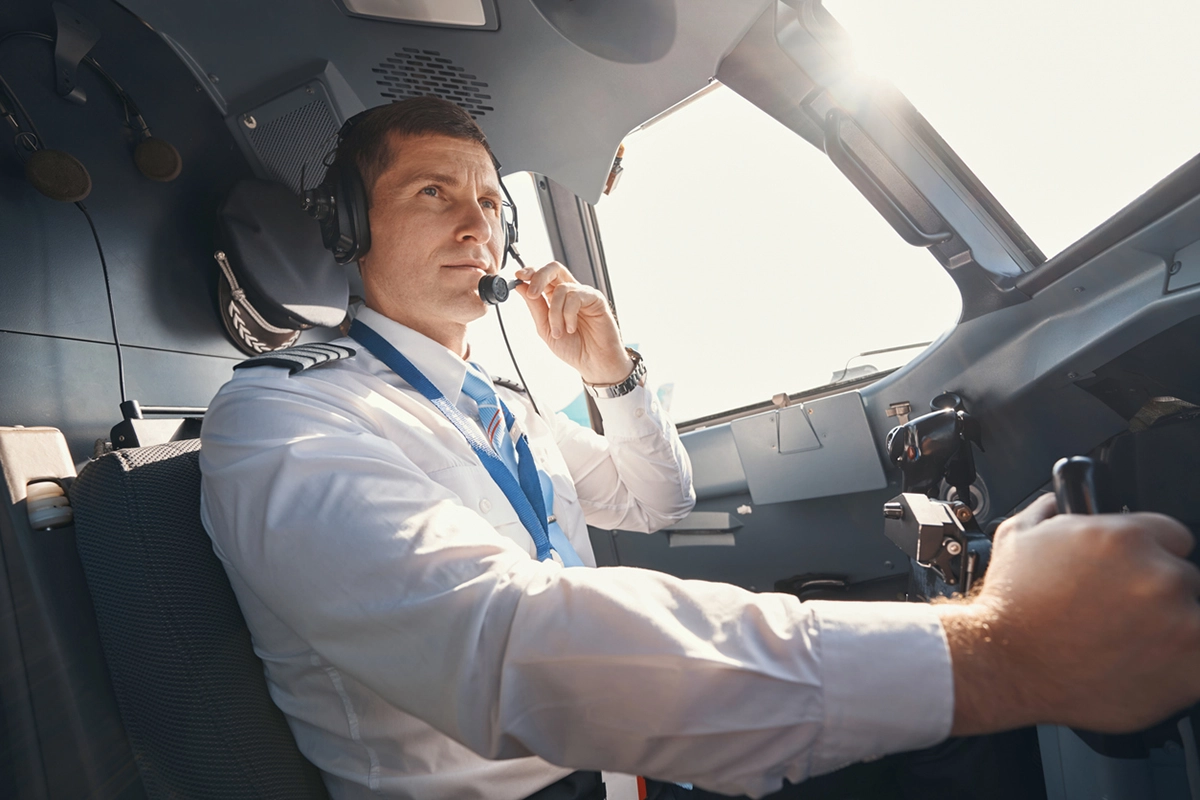
A Commercial Pilot License elevates your flying to a professional standard. The training demands tighter tolerances, more precise maneuvering, and a deeper understanding of aircraft performance than the Private Pilot or Instrument Rating courses.
The course introduces a set of advanced maneuvers unique to the commercial certificate: chandelles, lazy eights, eights on pylons, steep spirals, and power-off 180 degree accuracy landings. These are not just checkride items. They are designed to develop precise energy management, coordinated control across a wide range of airspeeds and attitudes, and the ability to divide your attention between cockpit instruments and outside references.
The CPL also includes a significant amount of pilot-in-command time. With 65 hours of supervised solo flight, you will build cross-country experience, night operations proficiency, and the confidence to operate as a professional pilot before you ever take the checkride.
Course Details at a Glance
- Ground School
26.7 hours of instructor led classroom training at our Kissimmee campus
- Online Study
King Schools computer based training completed from home before arrival
- Dual Flight Time
55 hours of flight training with a certified flight instructor
- Solo Flight Time
65 hours of pilot-in-command supervised solo flight time
- Location
AeroStar main campus, Kissimmee, FL (KISM)
- Aircraft
Cessna 150 or Cessna 172 Technically Advanced Aircraft
Course Investment
Pricing based on FAA Part 141 minimum required hours.
Cessna 150
$160/hr wet rental | $75/hr instructor
$25,342.00
Total minimum cost
- 55 hours dual flight instruction
- 65 hours PIC supervised solo
- King Schools online ground course
- 26.7 hours CFI led ground school
- Supplies and study materials
Cessna 172
$195/hr wet rental | $75/hr instructor
$30,192.00
Total minimum cost
- 55 hours dual flight instruction
- 65 hours PIC supervised solo
- King Schools online ground course
- 26.7 hours CFI led ground school
- Supplies and study materials
*These are minimum required hours for course completion. Actual flight hours will vary based on individual needs and FAA certification standards. Pre and post briefing costs are not included. All programs require an iPad.
Prerequisites
PPL With Instrument
Must hold an FAA Private Pilot License for airplane single engine land with an instrument rating.
FAA Medical
Must hold a current and valid FAA medical certificate (at least 2nd Class for commercial privileges).
Minimum Age
Must be at least 18 years old prior to course graduation to receive the Commercial Pilot License.
English Proficiency
Must be able to read, speak, write, and understand English per FAA requirements.
What You Will Learn
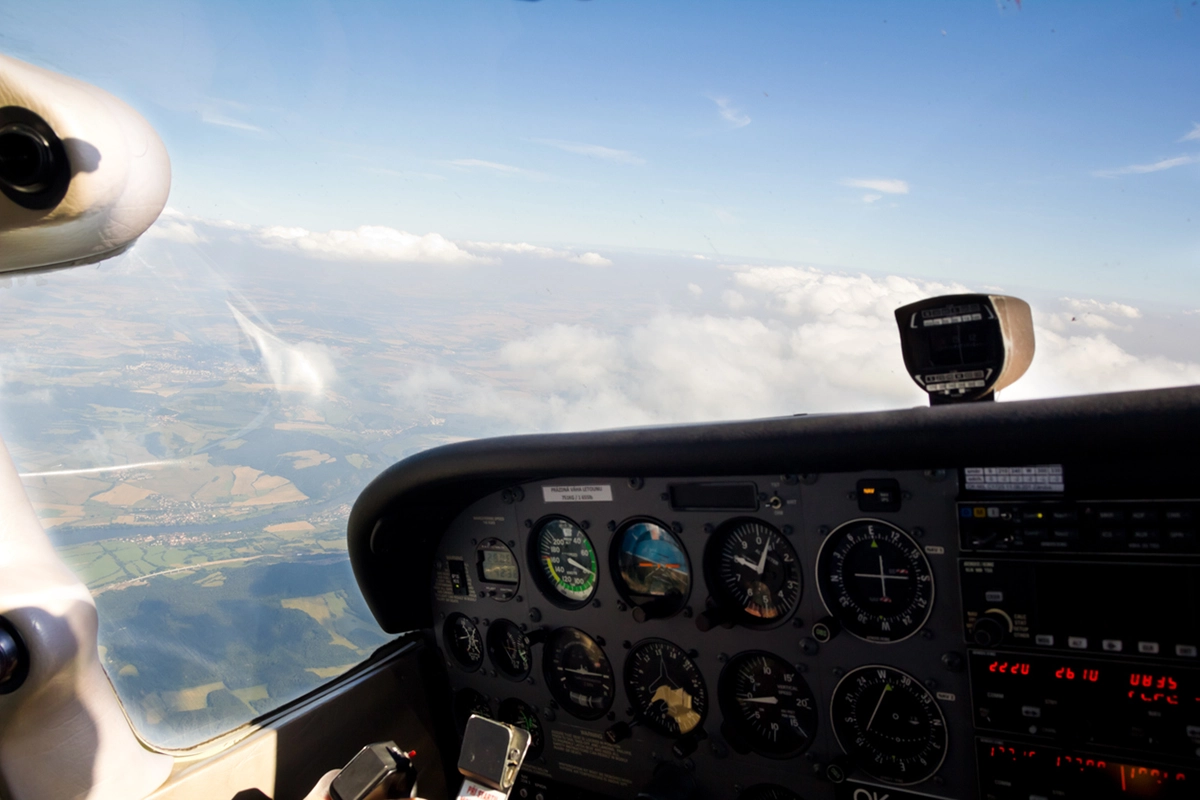
- Chandelles: maximum performance climbing turns that develop coordination and energy management
- Lazy eights: continuous flowing turns that build smooth, coordinated control across changing airspeeds
- Eights on pylons: advanced ground reference maneuvering that sharpens attention division and altitude control
- Steep spirals: controlled descending turns that prepare you for power-off emergency landings
- Power-off 180 degree accuracy landings
- Short field and soft field takeoffs and landings to commercial standards
- Extended day and night cross-country flight planning and execution
- Advanced aircraft systems and performance planning
- Commercial pilot aeronautical decision making and crew resource management
- FAA commercial knowledge test preparation
How Training Works
AeroStar’s Part 141 Commercial Pilot course follows a structured three phase process.
- 1Study at Home
Complete your King Schools online ground study covering commercial regulations, advanced aerodynamics, aircraft performance, and systems before arriving at AeroStar.
- 2Train at AeroStar
Attend 26.7 hours of instructor led ground school. Begin 55 hours of dual instruction focused on commercial maneuvers and 65 hours of PIC solo time building cross-country and night experience.
- 3Earn Your Commercial Pilot License
Pass your FAA Commercial Pilot knowledge test and practical checkride. Graduate qualified to fly for compensation or hire.
Frequently Asked Questions
What can I do with a Commercial Pilot License?
A Commercial Pilot License allows you to fly for compensation or hire. This includes working as a charter pilot, banner tow pilot, aerial survey pilot, cargo pilot, corporate pilot, or flight instructor (with the additional CFI certificate). It is also a prerequisite for the Airline Transport Pilot certificate required by the airlines.
What is the difference between private and commercial privileges?
A Private Pilot License allows you to fly for personal use but not for pay. A Commercial Pilot License allows you to be compensated for your flying. The commercial certificate requires a higher standard of airmanship, more flight hours, and proficiency in advanced maneuvers that are not part of private pilot training.
How long does the course take?
The timeline depends on your training frequency and how quickly you build the required PIC solo hours. The course requires a minimum of 55 hours dual and 65 hours PIC solo. With full-time training, most students complete the course in 3 to 6 months. The 65 hours of solo time building is often the longest phase.
What does pilot-in-command supervised solo time mean?
Pilot in command supervised solo time means you fly the aircraft alone, without an instructor on board, but your flights are planned, briefed, and debriefed with your instructor. You are building flight hours and experience under the guidance of your training program while acting as the sole pilot in the aircraft.
What are commercial maneuvers?
Commercial maneuvers are a set of advanced flight maneuvers unique to the commercial certificate: chandelles, lazy eights, eights on pylons, steep spirals, and power-off 180 degree accuracy landings. They are designed to develop precise energy management, coordinated aircraft control, and the ability to operate at the edges of the aircraft’s performance envelope.
What happens if I need more hours than the minimum?
The prices listed are based on FAA Part 141 minimum required hours. Many students require additional flight time beyond the minimums to reach proficiency. Additional hours are billed at the published hourly aircraft rental and instructor rates.
Is this course GI Bill approved?
Yes. AeroStar’s Part 141 Commercial Pilot course is GI Bill approved for eligible veterans. Contact our admissions team at 407-888-9011 to confirm your eligibility and discuss enrollment.